Investor and Employee Visas in the UAE: From Entry Permit to Emirates ID
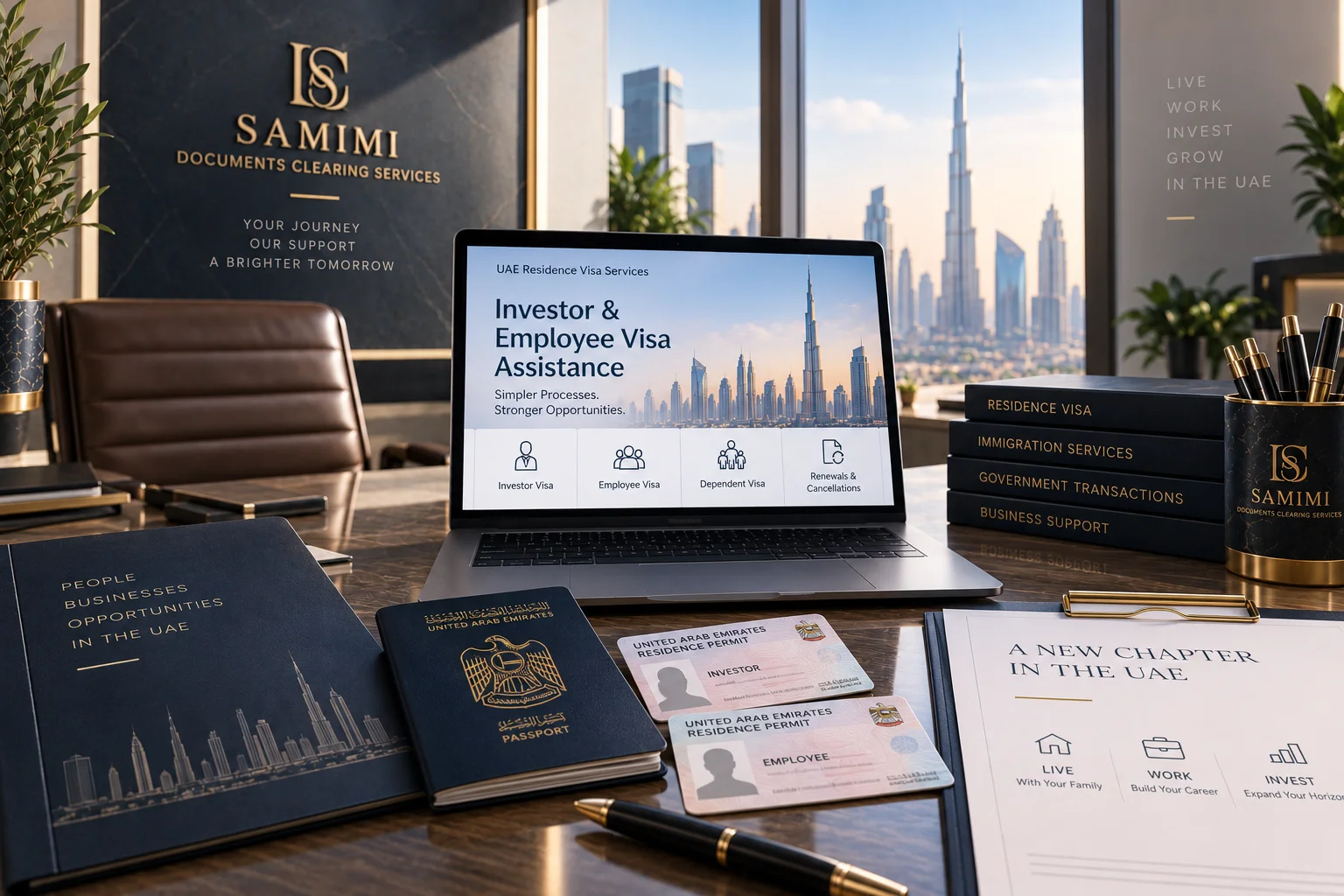
Every residence visa in the UAE follows the same backbone: an entry permit, a medical fitness test, an Emirates ID application and the visa itself stamped into the residency system. What differs is who sponsors it and what has to be true before the first step is allowed. This guide walks through investor (partner) visas and employee visas as a company handles them, from quota to the plastic card.
Investor and partner visas
A shareholder or partner in a licensed company can hold a residence visa sponsored by that company. The application is made on the company's immigration file, and the authority checks the licence, the shareholding shown in the memorandum and, for some structures, the paid-up capital or a bank letter. Investor visas are typically issued for two years on the mainland and per the zone's rules in free zones; the ten-year Golden Visa is a separate track with its own investment thresholds.
Employee visas
Employees are sponsored through two systems working together. The Ministry of Human Resources and Emiratisation (MOHRE) issues the work permit and registers the labour contract, while the immigration authority issues the entry permit and residence visa. Free zone employees are handled by the zone's own labour channel with the same immigration steps. A visa can only be applied for when the company's quota allows it, which is tied to the office space and, on the mainland, to the company's classification.
The sequence, step by step
- Quota and file check. Confirm the immigration file and establishment card are valid and that a visa slot is available.
- Offer letter and work permit (employees only): the signed offer is registered with MOHRE and the work permit approved.
- Entry permit. Issued electronically. A person already in the UAE on a visit or another visa completes a status change instead of exiting.
- Medical fitness test at an approved centre; results are linked directly to the file.
- Emirates ID application with biometrics at a typing centre or ID service point.
- Residence visa issuance, then the labour contract is finalised for employees.
- Emirates ID card delivered, and the health insurance policy attached to the record.
With a complete file, the whole sequence usually takes a few weeks; a missing attestation or a medical retest is what stretches it.
Documents to have ready
- Passport with at least six months' validity and a white-background photograph.
- Trade licence, establishment card and immigration file details of the sponsoring company.
- For investors: the memorandum of association showing the shareholding.
- For employees: attested education certificate where the job title requires it, the signed offer letter and, for some nationalities, additional approvals.
- Health insurance meeting the emirate's minimum cover.
- For family sponsorship afterwards: attested marriage and birth certificates with legal translation, and the sponsor's tenancy contract and salary evidence.
Renewals, cancellations and changes
Renewal repeats the medical and Emirates ID steps before expiry. Cancellation requires settling the labour contract and returning the ID; a new employer can then apply within the grace period. Changing a job title, salary or sponsor is an amendment on the labour side that must be reflected before the immigration record is touched. Keeping the three records aligned, licence, labour and immigration, is what keeps a company's file clean.
How Samimi DCS helps
We check quotas and file validity before anything is promised, prepare the documents, submit the MOHRE and immigration applications, book the medical and Emirates ID appointments, chase each step and hand over the visa and ID. For companies hiring regularly, we run the whole cycle as a standing service so managers never touch the portals.
Visa categories, quotas and document lists are set by the federal and local authorities and change periodically. We confirm the current requirements before each application.